
The buyer plans to open in 2028 at Carolina Pavilion. For the shoppers and retailers who already use the South Boulevard center, a grocery store could change how often people visit and where they stop once they arrive.
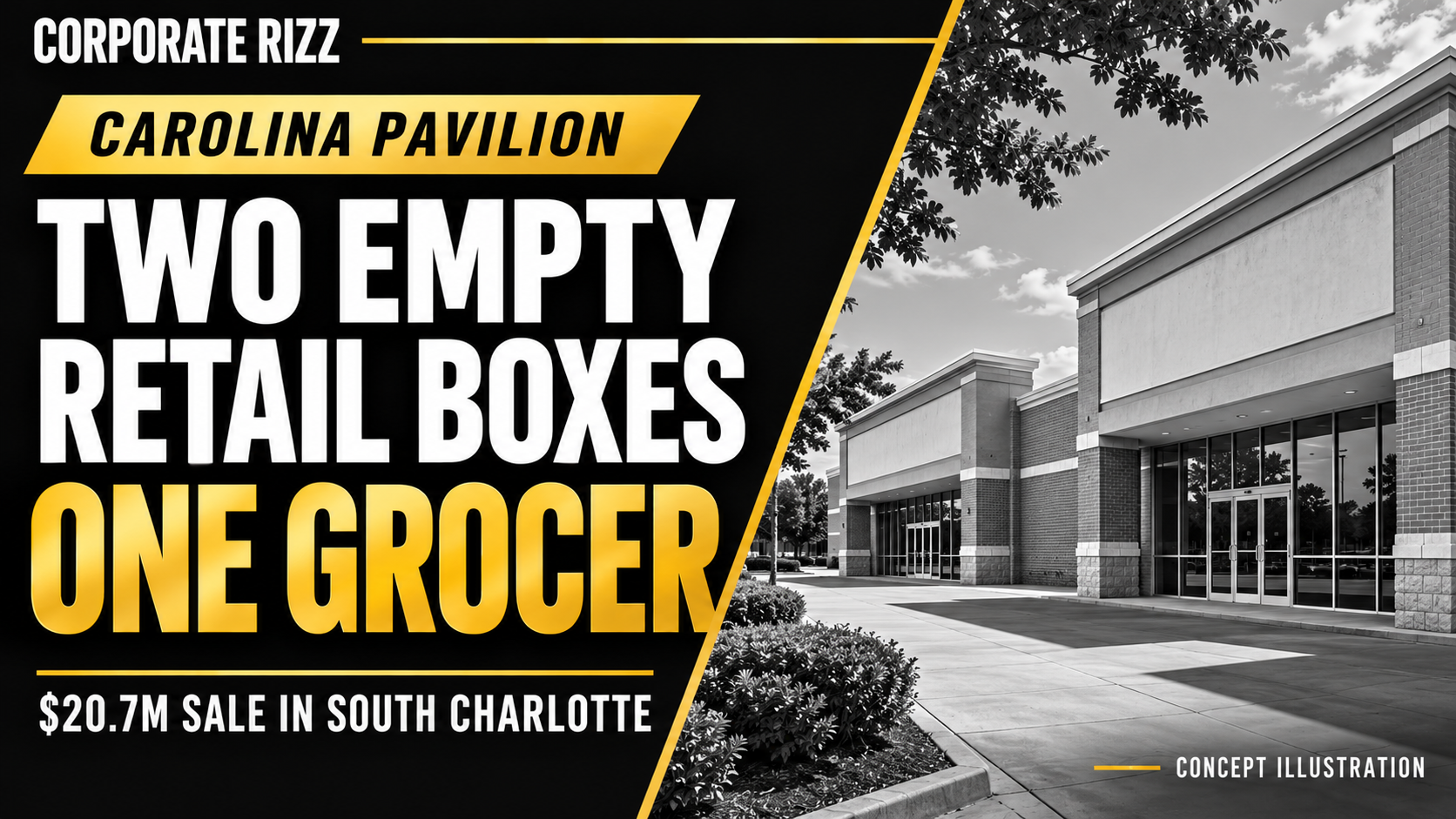
A national grocer has paid $20.7 million for the former Value City Furniture and Jo-Ann Fabrics spaces at Carolina Pavilion in South Charlotte. Together, the two vacant storefronts span 76,500 square feet. The buyer paid roughly $271 per square foot and plans to open in 2028, according to seller CTO Realty Growth, which announced the deal November 23. CTO has yet to name the chain.
For Charlotte shoppers, the name on the front door is the obvious question. For the real estate business, there’s another one worth asking: Why would a landlord sell two anchor spaces to a grocer when it had just demonstrated how much money it could make leasing vacant boxes?
The answer starts with what CTO gets to keep. The sale gives the company cash to pay down debt today. It also puts a future grocery store alongside hundreds of thousands of square feet of retail that CTO still owns. If that grocer brings South Charlotte households back every week, the landlord can benefit from those visits long after it spends the sale proceeds.
The South Boulevard property CTO bought in 2024
CTO acquired Carolina Pavilion in August 2024 as part of a $137.5 million purchase of three open-air shopping centers. The other two properties were Millenia Crossing in Orlando and Lake Brandon Village in the Tampa area. At the time, CTO described Carolina Pavilion as a 72-acre regional shopping destination on South Boulevard. Trade publication Connect CRE put the Charlotte portion of the purchase at approximately $94 million.
One detail from that acquisition helps explain the grocery deal two years later. Target already owned its store at Carolina Pavilion, and CTO’s purchase excluded it. From a shopper’s perspective, Target was part of the same destination. From a landlord’s perspective, the store next door could draw customers while sitting under separate ownership. The grocer will have a similar relationship to the surrounding center.
The scale of the sale is striking in that context. The $20.7 million the grocer paid for two former stores amounts to roughly 22% of the reported $94 million Charlotte acquisition price. That comparison alone cannot establish CTO’s profit on the boxes. It does show how much of the original purchase price the landlord can recover in one transaction while retaining the bulk of the property.
Four leases explain why the fifth deal was a sale
Since buying Carolina Pavilion, CTO has signed four leases covering 117,000 square feet of previously vacant anchor space. Two of those agreements, with western-wear retailer Cavender’s and bookseller 2nd & Charles, came in the third quarter of 2026. CTO reported a 79% blended increase in cash rent on the four deals compared with the previous leases on those spaces.
The 79% figure applies to those four leases. A separate number gives a better picture of what happened across the property: annualized cash base rent per occupied square foot rose from $14.58 when CTO bought the center to $16.28, an increase of about 12%. The distinction matters. A landlord can negotiate a substantial increase on a handful of expiring or replacement leases while the rent on most of the property continues to move gradually.
The grocery transaction solves a different problem. A lease would have given CTO a stream of rent and left it with capital tied up in the buildings. Selling gave it a lump sum and a buyer with its own reason to invest in the site. CTO intends to use the net proceeds to repay borrowings on its revolving credit line. The company expects that debt reduction to benefit earnings per share before the grocer serves its first customer.
How a center gets to 97% leased before the grocery store opens
CTO reported that leased occupancy at Carolina Pavilion would reach 97% after accounting for the sale, compared with 87% as of September 30. Those figures describe the landlord’s position. Someone driving past the former furniture and fabric stores could still see two dark storefronts and reasonably wonder what changed.
What changed was ownership. While CTO held the boxes, their square footage counted toward the space it had available to lease. Once the grocer bought them, that vacancy came off CTO’s books. The physical work of opening a grocery store runs on a longer clock. For investors evaluating the property, leased occupancy answers one question. For neighboring retailers waiting on new customers, the opening date answers another.
The deal also leaves two very different per-square-foot figures at the same address. The grocer paid approximately $271 per square foot for the space it wanted. CTO puts its remaining investment in the center at $132 per square foot. The first figure is a sale price for a particular piece of real estate. The second is the landlord’s investment basis in what it retained. Applying the grocery buyer’s price to every remaining storefront would overstate what this transaction establishes about the center’s value.
The opportunity is the second stop
Carolina Pavilion already gives shoppers reasons to make a planned trip. Its lineup includes Floor & Decor, Academy Sports, Nordstrom Rack, and Ross. A household might drive to South Boulevard for flooring samples one weekend or a pair of running shoes the next. A grocery store could earn a place in the same household’s weekly routine. That difference in visit frequency is the most interesting part of the deal for the merchants next door.
But a grocery trip only helps another retailer if the customer makes a second stop. Someone picking up dinner on the way home may park at the nearest entrance and leave ten minutes later. A shopper who can walk easily from the grocer to a neighboring store has a reason to stay. Across a property of this size, where customers park, which entrance they use, and what they pass on foot could matter as much to an individual merchant as the identity of the grocery chain.
That leaves Carolina Pavilion with two milestones. CTO has reached its own: it found new tenants for four anchor spaces and a buyer for two more. South Charlotte’s milestone comes with the planned opening in 2028. The clearest sign of what the deal delivers may be an ordinary Tuesday evening, when a shopper pulls into Carolina Pavilion for groceries and decides whether to make one more stop.
Sources: CTO Realty Growth sale announcement · 2024 acquisition announcement filed with the SEC · Connect CRE acquisition coverage.